Most businesses don't have a marketing problem. They have a systems problem.
They've tried the ads. They've hired someone for social media. Maybe they've built a website — or three. But nothing quite connects, and growth feels like pushing a boulder uphill.
That's not a budget problem. It's not a creativity problem. It's an infrastructure problem.
This article explains what a marketing system actually is, why most small businesses are operating without one, and what it looks like when you build it properly.
What most businesses actually have
When I audit a new client's marketing, I almost always find the same thing: a collection of tactics with no connective tissue.
A website that was built two years ago and hasn't been touched since. A social media account that posts when someone remembers. A Google Ads campaign that's been running on autopilot. An email list nobody sends to. A referral process that exists only in the founder's head.
Each piece exists. None of them talk to each other.
The result is predictable: inconsistent lead flow, unpredictable revenue, and a growing sense that marketing “doesn't work” — when really, the problem is that there's no system for it to work within.
So what is a marketing system?
A marketing system is the integrated infrastructure that connects every stage of your customer journey — from the moment someone discovers you to the moment they become a loyal client and refer others.
It's not a tool. It's not a campaign. It's not a social media strategy.
It's the architecture underneath all of those things.
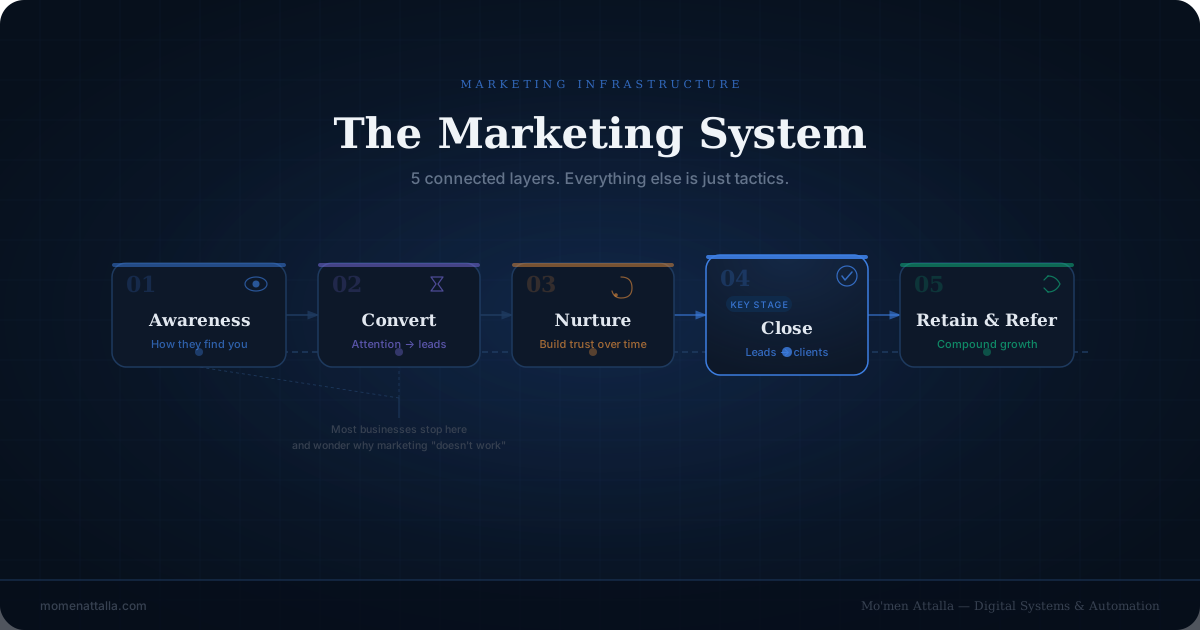
A functioning marketing system has five layers:
1. Awareness — how people find you
This is your top-of-funnel. Paid advertising, SEO, social media, referral programmes, PR. The job of this layer is simple: get the right people to notice you exist. Most businesses have at least one awareness channel. Few have more than one working reliably.
2. Conversion — how you turn attention into leads
Traffic without conversion infrastructure is just expensive noise. This layer includes your website, landing pages, lead magnets, contact forms, and calls to action. It answers the question: when someone arrives, what happens next?
3. Nurture — how you build trust before the sale
Most people who discover your business aren't ready to buy today. The nurture layer keeps you present and credible until they are — through email sequences, retargeting ads, content, and follow-up systems. Without this layer, you lose most of your leads to inertia.
4. Conversion to client — how you close
This is the sales layer: your proposal process, consultation flow, pricing presentation, and onboarding sequence. Even here, systems matter. A structured, automated intake process signals professionalism and removes friction at the most critical moment.
5. Retention and referral — how you compound growth
The most overlooked layer. Happy clients who feel well-served refer others. But referrals don't happen by accident — they happen because you've built a system that stays in touch, delivers value after the sale, and makes it easy to share.
Why tactics without infrastructure fail
Here's the core problem with the way most small businesses approach marketing:
They buy tactics instead of building infrastructure.
They run a Facebook campaign without a landing page that converts. They post on Instagram without a way to capture leads. They send a newsletter to a list they've never segmented. They get a referral and have no structured onboarding to make a great first impression.
Each tactic, in isolation, underperforms. So they conclude that Facebook doesn't work, or Instagram is a waste of time, or email is dead.
The tactic isn't broken. The system around it is missing.
“Tactics without infrastructure is just expensive noise. The businesses that win at marketing aren't necessarily doing more — they've built the system that makes everything they do compound.”
— Mo'men Attalla
What a marketing system looks like in practice
Let me make this concrete with a simple example.
A physiotherapy clinic in Budapest runs Google Ads. The ad points to their homepage. The homepage has a phone number. That's the system.
Here's what that system is missing:
A dedicated landing page built for the specific search intent. A booking flow that lets the patient schedule without calling. An automated confirmation and reminder sequence. A post-visit follow-up asking for a review. A referral prompt sent 30 days after treatment.
Now imagine the same clinic with all of those pieces connected. The Google Ad drives traffic to a landing page that converts at 12% instead of 2%. New patients book instantly without calling. No-shows drop by 40% because reminders go out automatically. Google reviews accumulate because the ask is systematised. Referrals happen because there's a process for them.
Same ad budget. Completely different results. The difference is infrastructure.
The three signs your business doesn't have a marketing system
If any of these sound familiar, you're operating on tactics, not a system:
- Your lead flow is inconsistent — busy one month, quiet the next, with no clear explanation for why
- Your marketing results depend on you personally — when you stop posting, stop sending emails, or stop following up, everything stops
- You can't explain your customer journey — if someone asked you to map exactly what happens from first contact to loyal client, you'd struggle to answer
How to start building one
You don't need to build all five layers at once. Most businesses start with two things:
First, fix the conversion layer. Make sure that whatever awareness you already have — however modest — lands somewhere that actually converts. A website that earns trust and prompts action. A booking flow that removes friction. A contact process that responds fast.
Second, add one nurture mechanism. Usually email. A simple sequence that goes out to everyone who enquires, whether or not they buy immediately. This alone recovers a significant percentage of leads that would otherwise go cold.
From there, you layer in the rest — more awareness channels, a referral system, retention flows — as your capacity and budget allow.
The goal isn't a perfect system on day one. It's a connected system that improves over time.
The bottom line
A marketing system isn't a luxury for big businesses. It's the infrastructure that makes any marketing work — at any scale.
If your marketing feels like it's not working, the question to ask isn't “which tactic should I try next?” It's: “what's missing from the system around the tactics I already have?”
That question leads somewhere much more useful.